

Blog
Why Is Your Plug or Socket Getting Hot? Causes and What to Do
Understand overheating, recognise warning signs and know when to stop using an appliance point
Updated on Oct 2026
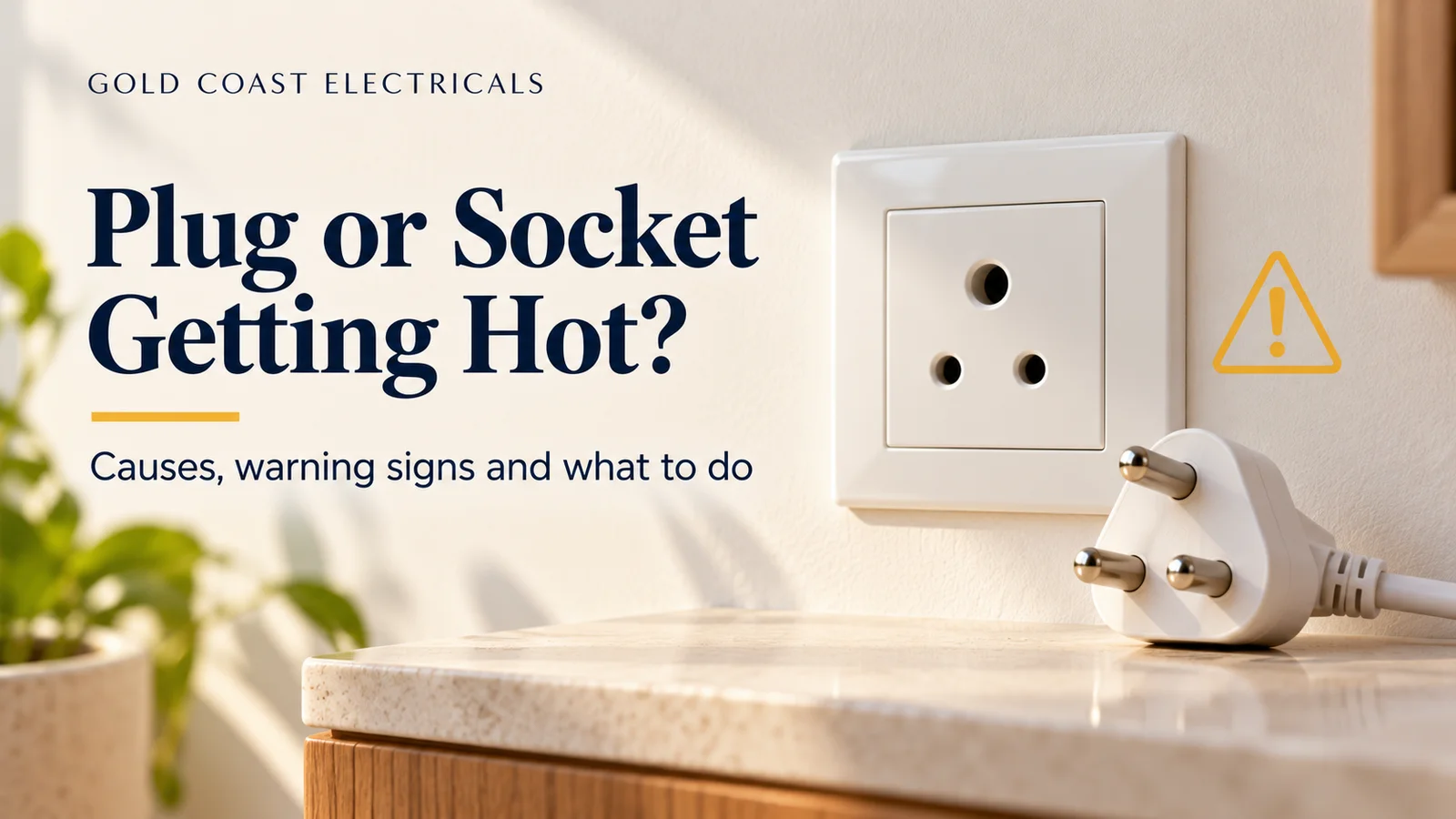
A plug or socket can get hot because of a loose or worn contact, an excessive load, damaged wiring or an unsuitable adapter. Stop using the point if you notice increasing heat, a burning smell, browning, melting, crackling or an unreliable connection. Do not keep running the appliance to see whether the problem gets worse.
A socket can overheat even when the MCB has not tripped. Local heating at a poor connection is different from an overload of the whole circuit. This guide explains the distinction and what to tell your electrician, without asking you to open the socket or work on wiring.
Banner illustration: a disconnected plug and socket; not a photograph of an inspected installation.
What to Do First if a Plug or Socket Is Overheating
- Stop using the affected appliance and point. Switch off or isolate the supply only if you can do so safely. Do not reach across a hot, damaged or sparking accessory to operate it.
- Do not pull out a hot, melted or stuck plug while it is energised. Keep clear and have the circuit safely isolated and inspected.
- Keep the point out of use until checked. Letting it cool, changing an adapter or moving the same appliance to another socket does not establish that it is safe.
- Contact a qualified electrician. Ask for the plug, socket, cable, terminals and circuit protection to be assessed together.
If there is smoke or fire, keep clear, evacuate and contact emergency services. Do not use water on electrical equipment. Do not delay evacuation to reach the distribution board.
Is a Warm Plug Normal, or Is It Overheating?
Some equipment, such as a charging power supply, produces warmth during normal operation. That does not mean a hot wall socket, pin contact or cable connection should be dismissed as normal.
There is no reliable household “touch test” that proves an electrical connection is safe. Temperature depends on the product, load, ambient conditions and where the measurement is taken. Do not deliberately touch pins or damaged parts, and do not use a universal temperature threshold from the internet to decide whether to continue operating the appliance.
The useful question is whether the point has changed: more heat than before, visible damage, a new smell, noise, loss of grip or intermittent operation. Any of these warrants stopping use and arranging inspection.
Common Causes of a Hot Plug or Socket
| Possible cause | What you may notice without opening anything | What needs checking |
|---|---|---|
| Worn or loose socket contacts | Plug no longer holds firmly; power cuts in and out | Socket condition and correct plug fit |
| Too much load | Several appliances share one adapter or extension board | Combined input current and every component's rating |
| Poor terminal connection | Heating or discolouration near the accessory | Termination, conductor condition and installation quality |
| Damaged plug or cable | Distorted casing, damaged insulation or discoloured pins | Plug, flexible cable and appliance condition |
| Unsuitable adapter | Large appliance connected through a smaller-rated point | Current rating, earthing and contact compatibility |
| Appliance fault | Abnormal operation, heat or protective-device trips | Appliance testing as well as the supply point |
These are possible causes, not a diagnosis. Several may occur together.
1. Loose or Worn Contacts
A plug needs firm, compatible contact with the socket. Wear, damaged pins or poor contact pressure can reduce the effective contact area and increase resistance. Electrical energy is then released as heat at that connection.
This explains why a single point may heat while nearby accessories appear normal. Do not bend pins, wedge the plug in place or keep wiggling it to restore power. The connection needs inspection.
2. Overloading a Socket or Extension Board
Adding the input currents of connected appliances helps explain the load on a shared adapter or board. The lowest-rated component can limit the arrangement; multiple outlets do not multiply the board's total rating.
Also remember that several wall sockets may share one circuit. Our electrical overload prevention guide explains the difference between the load on an individual point and the load on the circuit behind it.
3. Poor Connections Behind the Faceplate
A loose or deteriorated terminal can heat even if the visible faceplate looks intact. The defect may also have damaged nearby conductor insulation.
Do not remove the faceplate or try to tighten terminals yourself. An electrician needs to isolate and verify the supply is dead before inspecting the connection and deciding what requires repair.
4. Damaged Plugs, Cables or Adapters
A cracked casing, damaged cable or distorted pin can affect the connection. Adapters add another set of contacts and cannot increase the rating of the wall point or concealed wiring.
Tape is not a repair for a heat-damaged plug, cable or socket. Stop using damaged equipment and arrange a suitable repair or replacement.
Why Is My 16A Plug Getting Hot?
The 16A marking describes a current rating under specified conditions. It does not guarantee that the contacts, wiring or installation remain sound throughout the product's life.
A correctly rated plug can still overheat if it is loose, damaged, poorly terminated or used with an unsuitable outlet. A geyser, microwave, washing machine or other appliance should use the connection specified by its manufacturer; the appliance name alone does not determine the correct point.
Use our appliance socket and switch rating guide to prepare the model, input rating and connection details for your electrician. For the rating itself, see the 6A vs 16A socket comparison.
Why Hasn't the MCB Tripped?
An MCB responds to current according to its operating characteristics. It does not measure the temperature of every plug and socket on its circuit.
A high-resistance connection can produce significant local heat while the total circuit current remains below the level or duration needed to trip the breaker. Therefore, no trip does not mean no fault. An RCCB detects residual-current imbalance; it is not a universal detector of hot connections either.
Do not increase or decrease a breaker rating as a trial fix. Have the cause diagnosed and protection coordinated with the actual circuit. Our MCB selection guide explains how amp rating, trip curve and breaking capacity differ.
Will Replacing the Socket Solve the Problem?
It may be part of the repair, but the electrician should also check the mating plug, cable, terminals, load and protection. Heat-damaged components may need replacement, and the underlying cause must be addressed.
Changing a 6A faceplate to 16A does not increase the capacity of the wiring. Likewise, fitting a new plug to a damaged socket can expose the replacement to the same defect. Do not reconnect simply because the point has cooled or the visible part has been changed.
What to Tell Your Electrician
Record these details without opening equipment or recreating the fault:
- Which appliance was running, its model and rated input current or wattage.
- Whether it was connected directly or through an adapter or extension board.
- Whether other appliances shared the connection.
- When the symptom appeared and whether any protective device tripped.
- Any visible discolouration, damage, odour, noise or loss of plug grip already noticed.
Accessible label photographs may help. Do not remove covers or energise equipment to obtain them.
Choosing Replacement Products After Inspection
Once the fault is identified, select a compatible plug and socket with the correct current rating, earthing arrangement and installation requirements. Confirm the markings and documentation of the exact product rather than relying on its appearance.
For product selection, explore Gold Coast Cube switches and sockets and plug tops, or send your confirmed product requirements. Replacement-product advice does not substitute for an on-site electrical inspection.
Sources and Further Reading
- Electrical Safety First: overloading sockets — background on combined loads and warning signs. Its UK-specific outlet ratings are not a specification for Indian sockets.
- Schneider Electric: thermal-magnetic breaker troubleshooting — technical background on high-resistance connections and heating. Its maintenance instructions are intended for competent personnel, not DIY socket repair.
For other symptoms, read our guide to common electrical problems and safe next steps.
Frequently Asked Questions
Why is my plug getting hot even though the MCB has not tripped?
A poor connection can create concentrated heat without drawing enough total current to operate the MCB. A breaker that has not tripped does not prove a plug or socket is safe. Stop using a point with overheating symptoms and have it inspected.
Is it normal for a plug or socket to feel warm?
Some equipment generates warmth in normal use, but touch alone cannot establish safety. Increasing heat, burning smells, discolouration, melting, crackling or an intermittent connection are warning signs. Stop using affected equipment and arrange inspection.
Why is my 16A plug getting hot?
A 16A rating does not prevent heating from loose contacts, damaged pins, poor termination, an unsuitable adapter or excessive load. The plug, socket, cable and circuit must all be suitable and in good condition.
Can I keep using a socket after it cools down?
Cooling does not repair a damaged or loose connection. Do not reconnect an appliance to test a suspect point. Have the plug, socket and circuit inspected before using it again.
Will changing a 6A socket to a 16A socket stop overheating?
Not necessarily. The cause may be a damaged contact, cable or terminal rather than the outlet rating. Changing the faceplate does not upgrade the circuit. An electrician should diagnose the fault and check the entire connection.
Should I replace only the burnt plug?
Heat can damage the plug, socket contacts, terminals and cable insulation. Replacing only the visible part may leave the cause or other damage unresolved. Have all affected components inspected and the required repairs completed.
Need Help Choosing the Right Electrical Products?
Get instant expert guidance via WhatsApp
You May Also Like
Which Socket and Switch Rating for Home Appliances?
Learn which socket and switch rating to use for ACs, geysers, refrigerators, washing machines, microwaves and other home appliances in India.
Read More →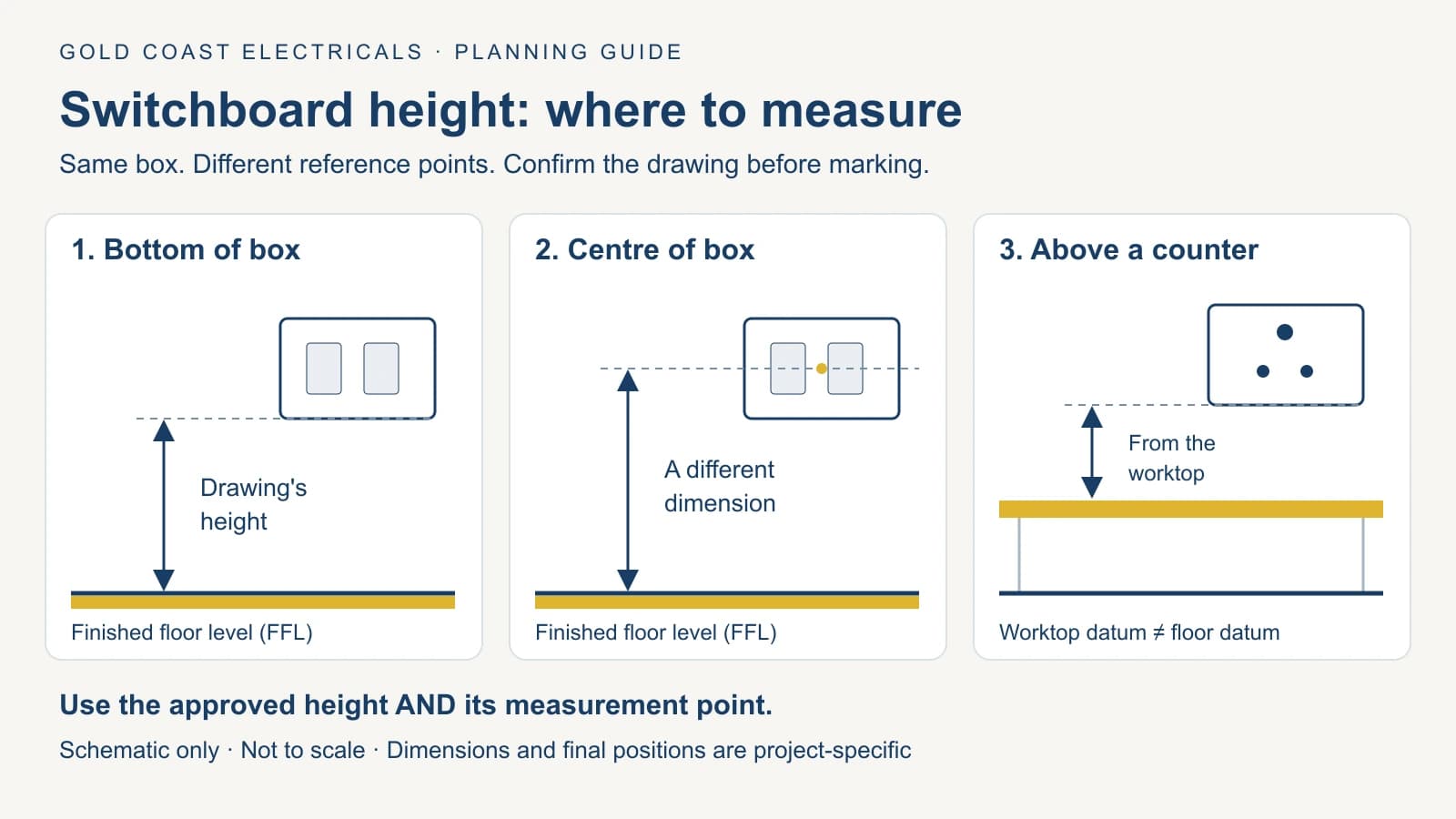
Switchboard Height in India: Room-by-Room Chart in Feet & mm
Check switchboard and socket heights in feet and mm, with a room-by-room chart, CPWD references and practical tips for planning your electrical layout.
Read More →
Comparing Gold Coast Switches: Luxe vs. Cube vs. Mia Series
Which Gold Coast modular switch range is right for you? Compare Luxe, Cube, and Mia series design, materials, pricing, and suitability.
Read More →