

Blog
How to Choose an MCB: Ratings, Trip Curves and Breaking Capacity
A practical checklist for discussing circuit protection with your electrician
Updated on Oct 2026
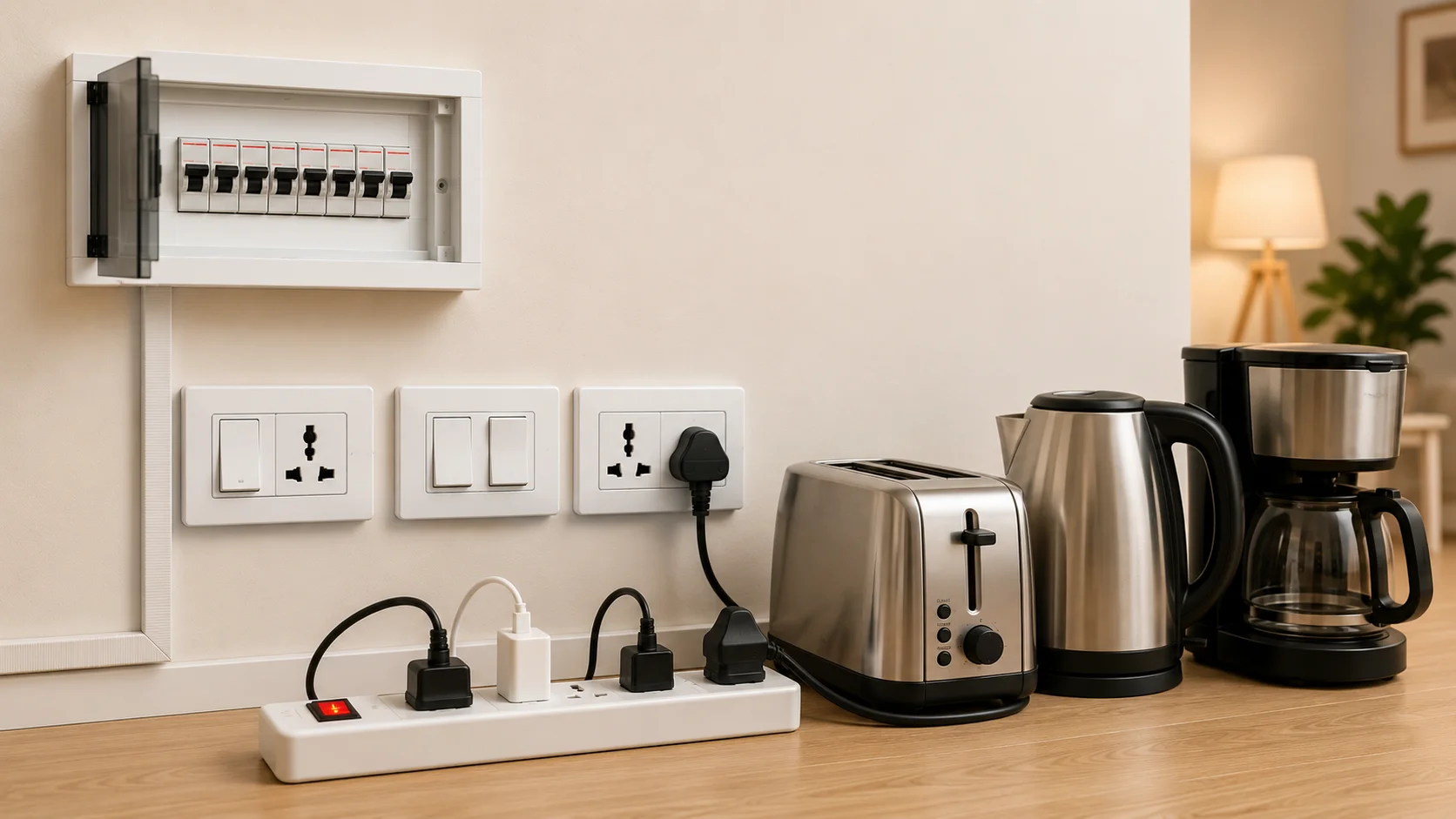
Choose an MCB by matching the circuit's design load, cable capacity, trip curve, pole arrangement and required breaking capacity. Its amp rating is only one part of the decision. A higher-amp breaker can leave wiring inadequately protected if the circuit was not designed for it.
This guide explains the markings to discuss with your electrician. It does not provide a universal cable-size-to-breaker chart, because installation conditions affect the correct selection.
What Does an MCB Do?
A miniature circuit breaker disconnects a circuit under specified overload or short-circuit conditions. Its thermal and magnetic mechanisms respond differently depending on the size and duration of the current.
An MCB is not a voltage stabilizer, surge protective device or substitute for shock protection. For the latter, discuss coordinated RCCB protection or an appropriate RCBO with your electrician.
MCB Selection Checklist
| What to check | What the marking means | What to confirm |
|---|---|---|
| Rated current, in amperes | The device's nominal current rating | Design load and the cable's permissible current under actual conditions |
| Trip curve | How it responds to overcurrent, particularly short-duration high current | Starting current and required fault disconnection |
| Breaking capacity, in kA | The specified short-circuit current it can interrupt | Prospective fault current and the applicable voltage and standard |
| Pole configuration | Conductors switched and protected by the device | Supply arrangement, neutral treatment and isolation requirements |
| Rated voltage and AC/DC use | Supply conditions for which the device is rated | The actual system and manufacturer's documentation |
1. Select the Amp Rating With the Cable
The electrician considers load demand, cable material and cross-section, installation method, ambient temperature, grouping and voltage drop. A cable concealed in insulation may have a different permissible current from the same size installed under other conditions.
Do not use a fixed rule such as “every 2.5 sq mm cable needs a 20A MCB.” The complete installation decides the answer. Use our appliance connection guide to prepare appliance input ratings before the assessment.
2. Understand B, C and D Trip Curves
For common IEC-style MCBs, the instantaneous magnetic trip bands are typically:
| Curve | Typical magnetic operating band |
|---|---|
| B | 3–5 times rated current |
| C | 5–10 times rated current |
| D | 10–20 times rated current |
These are magnetic operating bands, not normal operating loads or a statement that the breaker trips instantly whenever its amp rating is exceeded. Consult the exact time-current curve. Inrush current and available fault current both affect selection; “B for homes, C for offices” is too simplistic.
3. Check Breaking Capacity Separately
The amp rating and the kA rating describe different things. A 16A breaker with a 6kA marking is not a device intended to supply 6,000A continuously.
The required interrupting capacity must be suitable for the prospective short-circuit current at its installation point, taking any verified manufacturer-coordinated protection into account. Neither 6kA nor 10kA is automatically correct for every home or business. A higher breaking-capacity rating does not by itself make a breaker less sensitive to overload.
4. Confirm Poles and Supply Compatibility
Common labels include SP, DP, TPN and FP. Do not choose from the abbreviation alone: check which poles are protected, which are switched, and whether the neutral is included. Supply arrangement and isolation requirements matter.
5. Match the Distribution Board and Documentation
Check physical fit, approved busbar compatibility, terminal capacity, rated voltage, certification markings and the exact product documentation. Devices that look interchangeable may not form a manufacturer-approved assembly.
What If the MCB Keeps Tripping?
Repeated trips can indicate overload, an appliance fault, wiring damage or another issue. Do not hold a breaker on, repeatedly reset it or fit a larger one to suppress the symptom. Stop using affected equipment and arrange inspection. For other symptoms, read our electrical problems guide.
Prepare Your Enquiry
For Gold Coast MCB options, record the supply arrangement, proposed load, electrician's required amp rating, trip curve, pole configuration and breaking capacity. Request the current catalogue or send the specification for a product enquiry. Final circuit design and installation belong with a qualified electrician.
Technical Reference
The BIS overview of IS/IEC 60898-1 circuit-breaker requirements explains the standard's scope, markings and testing. For exact operating bands and selection, consult the applicable standard and the specific device's time-current curves and datasheet.
Frequently Asked Questions
How do I choose the correct MCB rating?
The rating must coordinate with the design load and the cable's current-carrying capacity under its actual installation conditions. An electrician also checks fault current, trip characteristics, disconnection requirements and the connected equipment. Cable size alone is not enough.
Is a C-curve MCB always better than a B-curve MCB?
No. The trip curve must suit the load's starting current and the circuit's fault conditions. A C-curve device allows a higher instantaneous current than a B-curve device before magnetic tripping; that does not make it a universal upgrade.
Does an MCB protect against electric shock?
An MCB provides overload and short-circuit protection. It does not replace residual-current protection. An RCCB detects residual current but needs coordinated overcurrent protection; an RCBO combines the two functions.
Can I fit a higher-amp MCB to stop repeated tripping?
Do not increase the amp rating simply to stop trips. The circuit may be overloaded or faulty, and a larger breaker may leave the wiring inadequately protected. Have an electrician diagnose the cause first.
Need Help Choosing the Right Electrical Products?
Get instant expert guidance via WhatsApp
You May Also Like
Why Is Your Plug or Socket Getting Hot? Causes and What to Do
Find out why a plug or socket gets hot, including loose contacts and overload. Learn the warning signs, safe next steps and why an MCB may not trip.
Read More →
Which Socket and Switch Rating for Home Appliances?
Learn which socket and switch rating to use for ACs, geysers, refrigerators, washing machines, microwaves and other home appliances in India.
Read More →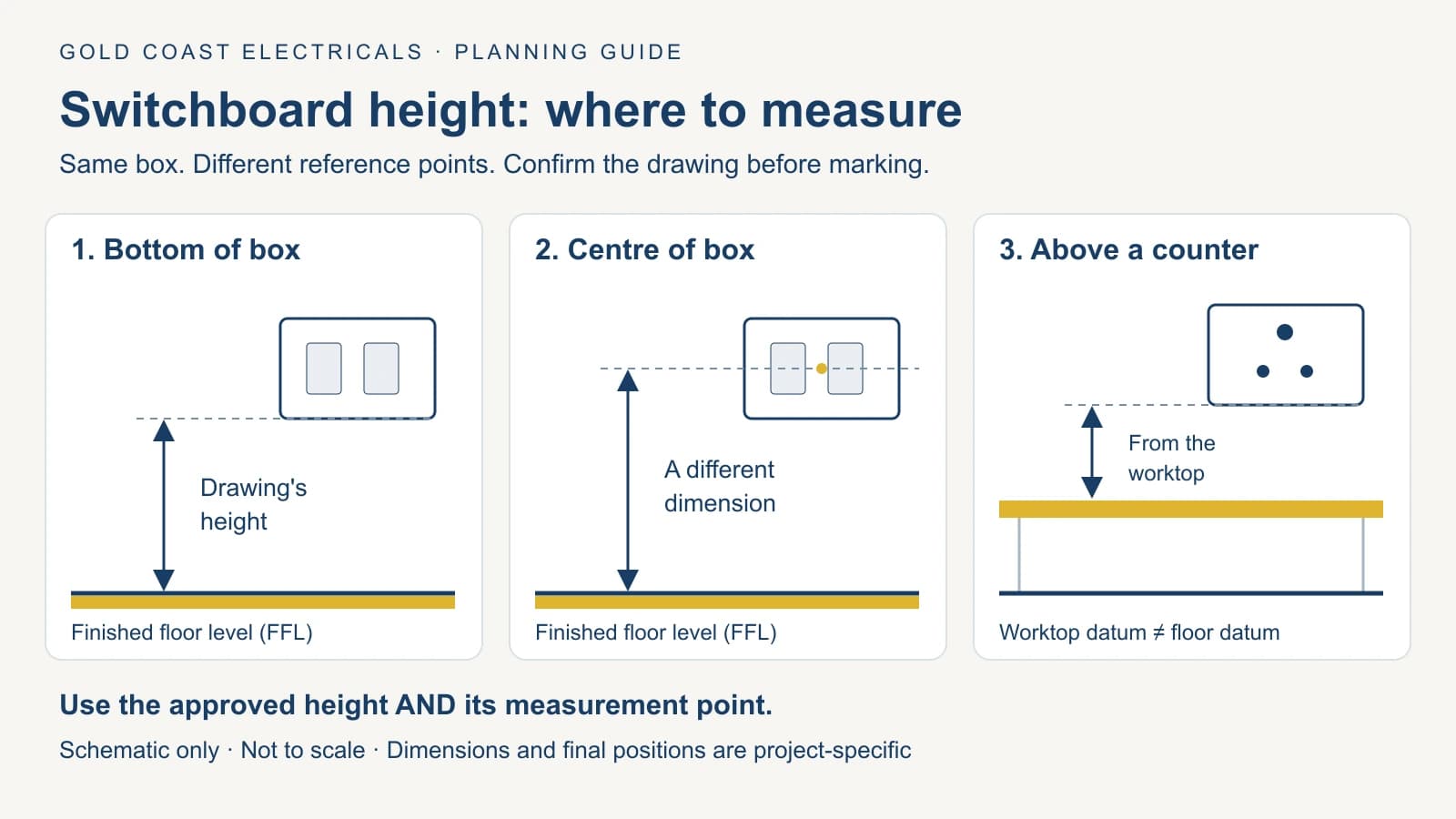
Switchboard Height in India: Room-by-Room Chart in Feet & mm
Check switchboard and socket heights in feet and mm, with a room-by-room chart, CPWD references and practical tips for planning your electrical layout.
Read More →