

Blog
Types of Electrical Sockets in India: 6A, 16A & Uses Explained
Compare 6A and 16A ratings, plug formats, earthing and combined sockets for Indian homes
Updated on Oct 2026
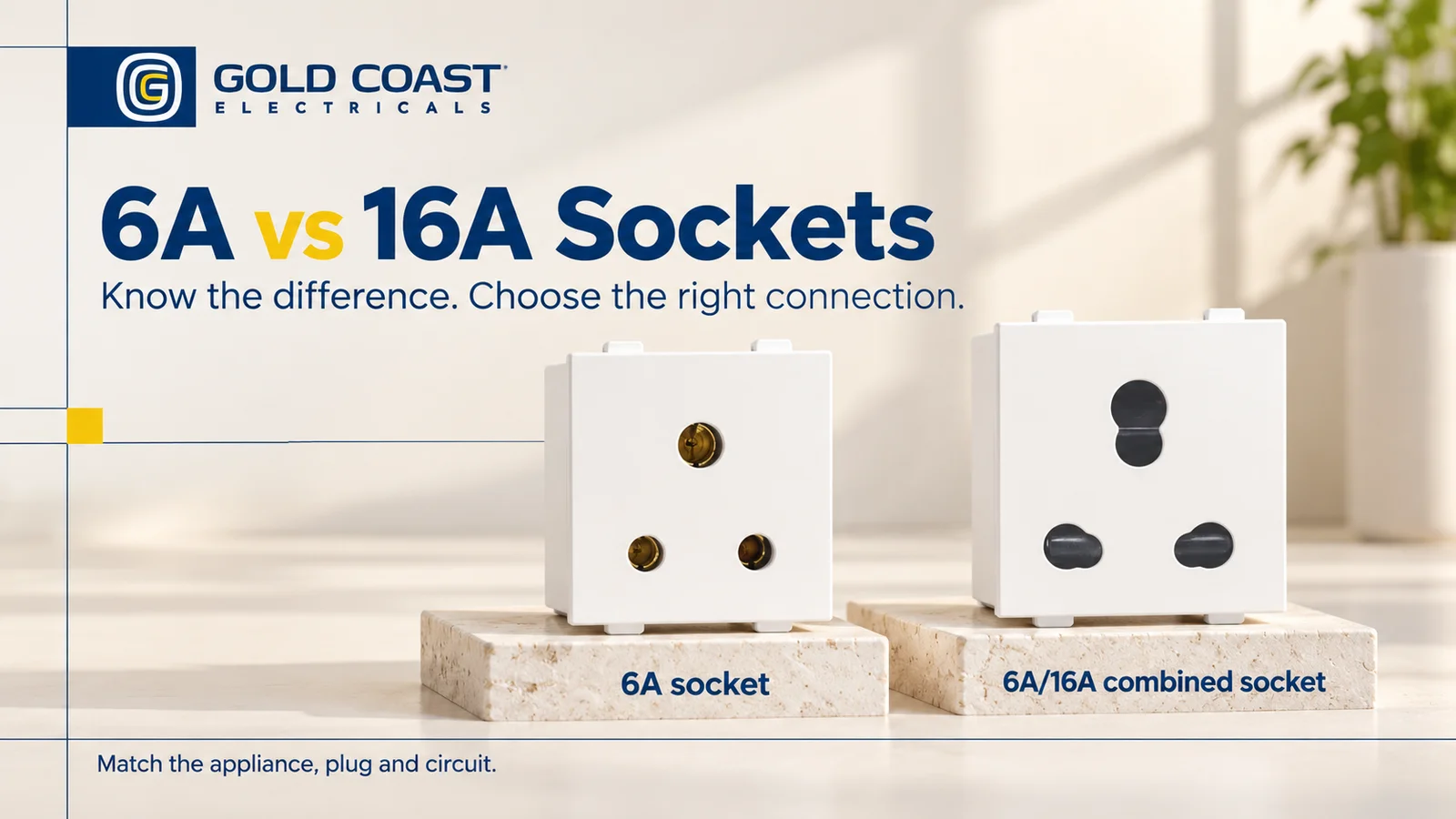
The main difference between a 6A and 16A socket is its rated current: 6 amperes versus 16 amperes. A 16A socket can carry a higher current under its specified conditions, but it does not make an appliance use more electricity. The appliance determines the load; the plug, socket, switch and circuit must all be suitable for it.
This guide explains socket ratings and formats used in India. For decisions about a specific AC, geyser, refrigerator or washing machine, use our home appliance socket and switch rating guide.
Looking for socket products? Compare Cube Classic 6A sockets, Cube porcelain-base sockets, Luxe modular sockets and Mia non-modular sockets. Check the exact model’s rating and configuration before ordering.
6A vs 16A Socket: The Key Differences
| Feature | 6A socket | 16A socket |
|---|---|---|
| Rated current | 6 amperes | 16 amperes |
| Common applications | Chargers, routers, lamps and other suitable low-load equipment | Higher-load appliances where the supplied plug and manual specify it |
| Common Indian round-pin format | Smaller pins and spacing | Larger pins and spacing |
| Power calculation at 230 V | 230 × 6 = 1,380 VA | 230 × 16 = 3,680 VA |
| Installation requirement | Load, switch, wiring and protection must suit the point | The same checks apply; a dedicated circuit may be required |
The calculated figures are not recommended appliance wattage limits. For a near-unity-power-factor resistive load, VA is approximately equal to watts. Motors and electronic equipment may have a different power factor, and starting current and installation conditions also matter. Use the appliance's rated input current and installation instructions when selecting its connection.
Does a 16A socket consume more electricity?
No. The rating describes the socket's capacity, not its own electricity consumption. Connecting the same suitable appliance to a correctly installed compatible outlet does not make it draw 16A. Energy use depends on the appliance's input power and how long it runs.
Can I replace a 6A socket with a 16A socket?
Changing the faceplate alone does not upgrade the circuit. An electrician must check the cable, upstream protection, switch rating, terminals and earthing before changing the outlet or increasing the connected load. A 16A marking on one component cannot compensate for an underrated component elsewhere.
Understanding What an Electrical Socket Actually Does
An electrical socket provides a connection point between an appliance and the power supply. While this sounds simple, sockets are designed differently based on:
- Current rating
- Voltage
- Load type
- Application area
Each socket is built to safely handle a specific range of electrical load. Using it outside that range can cause problems over time.
The Most Common Types of Electrical Sockets Used in Homes
Let's break down the socket types most commonly used in residential and light commercial spaces.
6A Electrical Socket
A 6A socket suits equipment whose input current and supplied plug are compatible with that rating. Common examples include phone chargers, routers, table lamps and televisions. Check the actual appliance: the category alone does not determine its electrical requirements.
Do not connect equipment that requires a higher-rated outlet through an adapter merely to make the plug fit.
16A Electrical Socket
A 16A socket provides a higher current rating. Some microwaves, induction cooktops, washing machines and other higher-load appliances specify this connection. Refrigerators, ACs and water heaters vary by model; some require a different arrangement or fixed connection.
A correctly rated socket is one part of a suitable installation. It cannot by itself prevent heating from loose contacts or make undersized wiring safe. See the appliance selection table for model-dependent checks.
Combined 6A/16A Socket
A combined socket is designed to accept the compatible plug formats stated by its manufacturer. Check its marked rating and instructions, including any restriction on simultaneous use. The marking does not mean that the available current ratings can simply be added together.
A combined 6A/16A socket is also different from a universal travel socket: accepting several plug shapes does not establish electrical compatibility or a safe current rating for every appliance.
2-Pin vs 3-Pin Sockets: What About Earthing?
A 3-pin connection includes an earth contact for equipment that requires protective earthing. A 2-pin plug may be appropriate for a Class II, double-insulated appliance designed without an earth connection. Follow the supplied plug and manufacturer instructions; do not remove an earth pin or use an adapter that defeats earthing.
Compare socket options for your switchboard
| Socket option | What to confirm before choosing | Explore the range |
|---|---|---|
| 6A socket | Appliance rating, plug fit and plate compatibility | Cube classic socket options |
| 16A socket | Appliance load, suitable wiring and circuit protection | Cube porcelain socket options |
| Combined switch and socket | Marked rating and installation requirements | SS combined units |
For a useful product enquiry: include the appliance model or input rating, the connection specified in its manual, preferred range and quantity. We can discuss product options and availability; your electrician should confirm circuit suitability.
Use the room-by-room switchboard height chart to discuss placement with your electrician. For range and availability enquiries, send us your socket requirements.
Universal Socket
What It Is
Universal sockets are designed to accept multiple plug types.
Where They Are Used
- Hotels
- Offices
- Commercial spaces
Important Note
While convenient, universal sockets should still be used carefully. Not all universal sockets are suitable for high loads, and quality varies significantly.
Always check the rating before using them for heavy appliances.
Socket Types Based on Application Area
Different rooms require different socket planning.
Sockets for Living Rooms
Living rooms usually require:
- Multiple 6A sockets for electronics
- Dedicated AC or heater points selected from the appliance manual
- Easy access for daily use
Poor planning here often leads to overuse of extension cords.
Sockets for Bedrooms
Bedrooms need:
- Charging sockets near beds
- 6A sockets for lamps and fans
- Optional sockets near dressing tables or workspaces
Convenience and accessibility matter just as much as safety.
Sockets for Kitchens
Kitchens are one of the most demanding areas electrically.
They require:
- Separate microwave and oven points with ratings selected from their manuals
- Dedicated points for refrigerator
- Proper spacing from water sources
Using the wrong socket in kitchens can quickly lead to failures due to heat and moisture.
Sockets for Bathrooms
Bathrooms require extra caution.
Have an electrician determine whether an outlet is permitted in the proposed location and select its position, suitable enclosure, earthing and residual-current protection. A splash-resistant faceplate alone does not make a bathroom outlet safe. Follow the appliance manual and applicable installation requirements.
Special-Purpose Electrical Sockets
Apart from standard sockets, there are sockets designed for specific needs.
USB Charging Sockets
These are increasingly popular for charging phones and tablets.
Where They Work Best
- Bedrooms
- Living rooms
- Workstations
They reduce the need for adapters and keep switchboards clutter-free.
Smart Sockets
Smart sockets allow remote control and scheduling.
When They Make Sense
- Homes with automation systems
- Energy monitoring needs
- Remote appliance control
However, they must still meet safety and load requirements like regular sockets.
Common Mistakes People Make When Choosing Sockets
Even today, many electrical problems come down to simple mistakes.
Some of the most common ones include:
- Connecting an appliance that exceeds the socket or circuit rating
- Choosing low-quality sockets to save money
- Overloading a single socket with multiple devices
- Ignoring safety certifications
- Not planning socket locations properly
Avoiding these mistakes improves safety and convenience instantly.
How to Identify a Good Quality Electrical Socket
A reliable socket should have:
- Firm grip on the plug
- Fire-retardant body material
- Strong internal contacts
- Smooth and secure fitting
- Compliance with Indian electrical standards
A loose or wobbly socket is always a warning sign.
Why Socket Quality Affects Appliance Life
When a socket provides unstable contact:
- Appliances may receive fluctuating power
- Internal components can wear out faster
- Heating increases
- Power losses occur
Using the right socket type protects not just your wiring, but also your appliances.
Installation and Maintenance Tips for Electrical Sockets
Even the best socket can fail if installed incorrectly.
Key points to remember:
- Always use a qualified electrician
- Ensure proper earthing
- Avoid using damaged sockets
- Replace loose or discolored sockets immediately
- Do not rely on adapters for long-term use
Regular inspection prevents small issues from becoming major problems.
Why Gold Coast Electricals Sockets Are a Reliable Choice
When it comes to electrical sockets, consistency and safety matter.
Gold Coast Electricals offers sockets that are:
- Designed for Indian electrical conditions
- Built with durable, high-quality materials
- Available in multiple ratings and configurations
- Easy to install and maintain
- Trusted by electricians and professionals
Their socket solutions are built to handle modern electrical loads while maintaining safety and performance.
For a new switchboard or renovation, compare the Cube modular switches and sockets, compact SS combined switch-socket units, and the available socket configurations. An adaptor should never be used to bypass a rating mismatch. Always have the final rating, wiring and earthing checked by a qualified electrician.
Final Thoughts
Understanding the different types of electrical sockets and their uses is one of the simplest ways to improve electrical safety in your home or workplace.
The right socket:
- Handles the load safely
- Protects appliances
- Reduces electrical faults
- Improves daily convenience
Sockets may seem like small components, but they play a big role in how safely and efficiently your electrical system works. Taking the time to choose the right ones is always worth it.
Already noticing heat at a connection? See why a plug or socket gets hot before choosing a replacement.
Reference for Indian Plug and Socket Ratings
The Bureau of Indian Standards explains current ratings, matching pin configurations, contact quality and temperature-rise requirements in its consumer guide to IS 1293 plugs and socket-outlets. Use the rating and certification markings on the exact product, together with the appliance manual, when discussing selection with your electrician.
Frequently Asked Questions
What is the difference between a 6A and 16A socket?
The current rating is 6 amperes versus 16 amperes. Common Indian round-pin versions also differ in pin size and spacing. Match the socket to the supplied plug, appliance input current, manual and complete circuit.
How many watts can a 6A or 16A socket handle?
At 230 V, voltage multiplied by rated current gives 1,380 VA for 6A and 3,680 VA for 16A. VA is approximately watts only for a near-unity-power-factor load. These figures are not recommended appliance wattage limits; use the appliance input rating and installation requirements.
Does a 16A socket consume more electricity?
No. Its rating describes current-carrying capacity. The connected appliance's input power and operating time determine electricity consumption.
Can I change a 6A socket to 16A without changing the wiring?
Changing the socket face alone does not upgrade the circuit. An electrician must check the existing cable, switch, protection, terminals and earthing before approving the change or increasing the load.
Recommended next steps
Plan a safer electrical system
Use the guide above to plan the installation, then compare the relevant products for your project.
Cube Switches & Sockets
Explore modular 6A, 16A and combined socket options for Indian homes.
Explore products →SS Combined Units
Compact switch-and-socket combinations for convenient surface installations.
Explore products →Multiplug Adaptors
Universal adaptors for compatible low-load devices at home, work or while travelling.
Explore products →Need Help Choosing the Right Electrical Products?
Get instant expert guidance via WhatsApp
You May Also Like

How to Find the Best Electrical Switches in 2026: A Practical guide
A practical 2026 guide to choosing the best electrical switches: modular vs conventional, key features, correct ratings, smart options and brand comparison tips.
Read More →
7 Common Electrical Problems at Home: Causes and Safe Next Steps
Flickering lights, tripping breakers, dead sockets or shocks? Compare seven household electrical problems, likely causes and safe steps before calling an electrician.
Read More →
Modern Modular Switches for a Modern Lifestyle - A Complete Guide
Discover how modern modular switches combine style, safety and smart automation. A complete guide to features, benefits and choosing the best switches for your home.
Read More →