Electrical overload occurs when more electrical current flows through a circuit than it was designed to handle. When this happens, wires can overheat, appliances may malfunction, and in severe cases, it can even lead to electrical fires.
Understanding how to prevent electrical overload in your home is crucial for maintaining safety, protecting appliances, and ensuring your electrical system operates efficiently. In this guide, we will explore the causes of electrical overload and practical steps homeowners can take to avoid it.
What Is Electrical Overload?
Electrical overload happens when too many devices draw power from a single circuit at the same time. Every electrical circuit in your home is designed to handle a specific amount of electricity. When this limit is exceeded, the circuit becomes overloaded.
Most modern homes have protective systems such as circuit breakers that shut off power when overload occurs. However, repeated overloads can damage wiring and electrical components over time.
Common signs of electrical overload in homes include:
- Circuit breakers tripping frequently
- Flickering or dimming lights
- Warm or discolored electrical outlets
- Burning smells near switches or sockets
- Appliances shutting off unexpectedly
Recognizing these warning signs early can help prevent serious electrical hazards.
Why Electrical Overload Happens in Homes
Electrical systems in many homes were designed years ago when households used far fewer appliances. Today, modern lifestyles rely heavily on electronics, which places greater demand on electrical circuits.
Some of the most common causes of overloaded circuits include:
- Plugging too many devices into a single outlet
- Using extension boards for high-power appliances
- Outdated wiring systems
- Insufficient electrical outlets in certain rooms
- Running multiple heavy appliances on one circuit
When electrical load exceeds the capacity of the wiring, the circuit can overheat, increasing the risk of damage or electrical fires.
Practical Ways to Prevent Electrical Overload in Your Home
1. Avoid Plugging Too Many Devices Into One Outlet
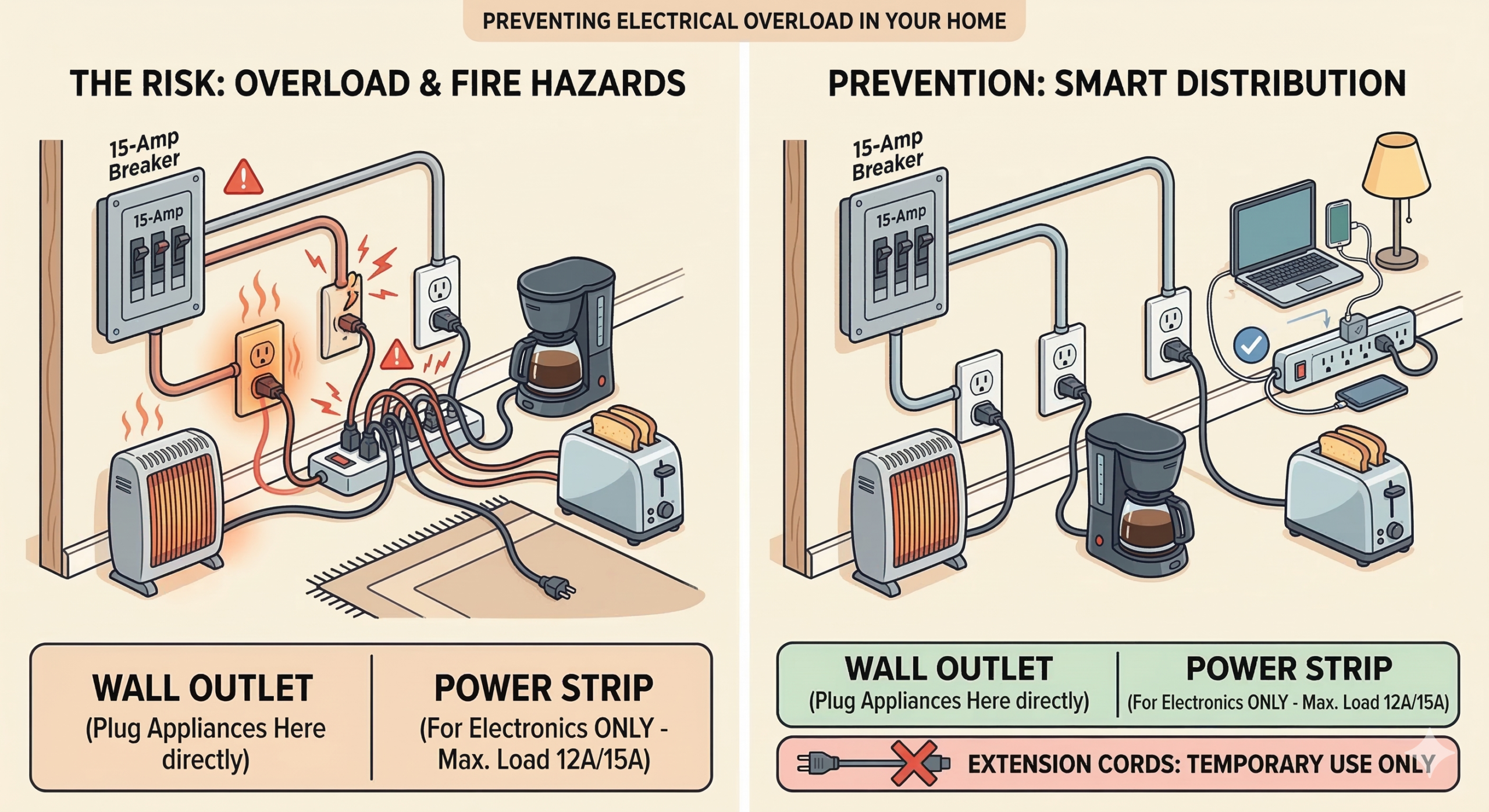
One of the simplest ways to prevent electrical overload is to avoid connecting multiple devices to the same outlet. Many homeowners use extension boards or multi-plug adapters to power several appliances at once, but this can easily exceed the outlet’s capacity.
To prevent overload:
- Use separate outlets for high-power appliances
- Avoid plugging multiple extension boards into one socket
- Distribute devices across different outlets in the room
Proper load distribution helps reduce stress on electrical circuits.
2. Use the Correct Socket Rating
Not all sockets are designed to handle the same electrical load. Smaller sockets are intended for low-power devices, while larger sockets are built for heavy appliances.
For example:
- 6A sockets are suitable for small electronics such as lamps or chargers
- 16A sockets should be used for appliances like air conditioners, ovens, or water heaters
Using the correct socket rating ensures that appliances operate safely and helps prevent electrical overload.
3. Install Circuit Breakers for Protection
Modern electrical systems rely on circuit breakers to protect against overload and short circuits. These devices automatically cut off power when excessive current is detected.
Circuit breakers provide important electrical overload protection by preventing wires from overheating and reducing the risk of electrical fires.
If your home still uses older fuse systems, upgrading to modern circuit breakers can significantly improve safety.
4. Upgrade Old Wiring Systems
In older homes, wiring may not be designed to handle modern electrical loads. Over time, wires can also deteriorate, which increases the chances of overheating and electrical failure.
Signs that your wiring may need upgrading include:
- Frequent breaker trips
- Flickering lights
- Burn marks on outlets
- Old or outdated switchboards
Upgrading your electrical wiring ensures that your system can safely support modern appliances and prevent overload issues.
5. Provide Dedicated Circuits for Heavy Appliances
Certain appliances consume a large amount of electricity and should ideally have their own circuit.
Examples include:
- Air conditioners
- Refrigerators
- Washing machines
- Electric ovens
- Water heaters
Dedicated circuits ensure these appliances receive adequate power without overloading other parts of the electrical system.
6. Use Extension Cords Carefully
Extension cords are convenient for temporary connections but should not be used as a permanent solution for powering multiple devices.
Improper use of extension cords can increase the electrical load on a circuit and lead to overheating.
To reduce risks:
- Use extension cords only when necessary
- Avoid running them under carpets or furniture
- Replace damaged cords immediately
Installing additional wall outlets is often a safer alternative.
7. Monitor High-Power Appliances
Certain appliances draw significant amounts of electricity when operating. Running several high-power devices simultaneously can easily overload a circuit.
Appliances that require higher electrical load include:
- Air conditioners
- Electric heaters
- Microwave ovens
- Induction cooktops
Spacing out the use of these appliances can help maintain balanced electrical load and prevent circuit overload.
8. Schedule Regular Electrical Inspections
Routine electrical inspections help identify potential problems before they become serious hazards.
A qualified electrician can check for:
- Loose wiring connections
- Overloaded circuits
- Damaged switches or sockets
- Outdated electrical components
Regular inspections are an important part of maintaining electrical safety at home.
Common Warning Signs of Electrical Overload
Even with precautions, it is important to recognize early signs that your electrical system may be overloaded.
Watch out for these warning signals:
- Frequent circuit breaker trips
- Dimming lights when appliances start
- Warm outlets or switch plates
- Burning smells from sockets
- Appliances losing power unexpectedly
If you notice these signs, reduce electrical usage immediately and consult an electrician to inspect the system.
Why Preventing Electrical Overload Is Important
Electrical overload can damage appliances, weaken wiring insulation, and increase the risk of electrical fires. Taking simple steps to prevent overload helps protect your home and ensures your electrical system remains reliable.
Benefits of preventing electrical overload include:
- Improved electrical safety
- Longer lifespan of appliances
- Reduced risk of electrical fires
- More efficient energy usage
By managing electrical load properly, homeowners can maintain a safer and more efficient home environment.
Final Thoughts
As homes continue to rely on more electrical devices, preventing electrical overload has become increasingly important. Overloaded circuits not only damage appliances but can also create serious safety hazards.
By following simple practices such as avoiding overloaded outlets, using proper socket ratings, upgrading outdated wiring, and installing circuit protection devices, homeowners can effectively prevent electrical overload in their homes.
A well-maintained electrical system ensures that your home remains safe, efficient, and prepared to handle the electrical demands of modern living.